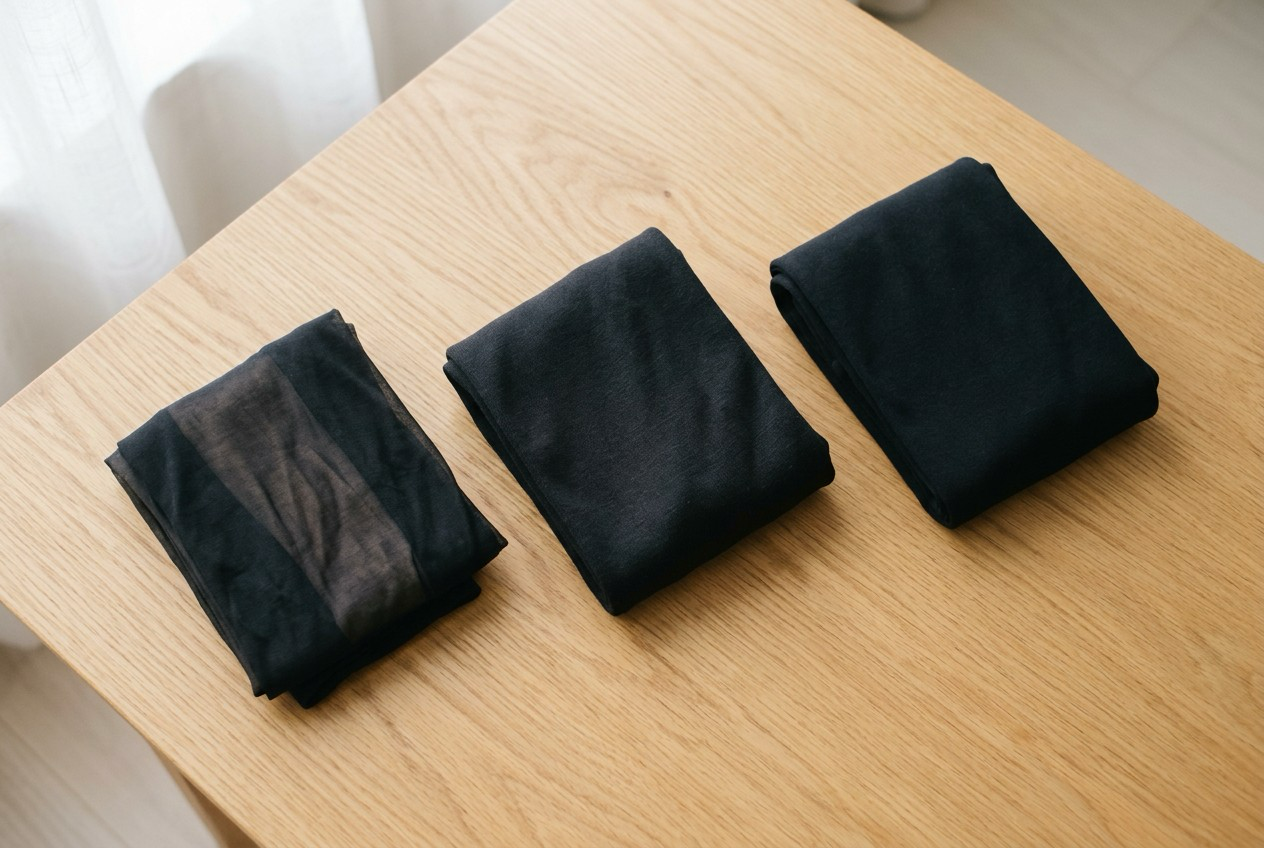
Sheer vs Opaque vs Matte Black Tights: What's the Difference?
Standing in front of a hosiery wall, most shoppers pick black tights the way they pick a parking spot — whichever is closest. The three terms on the packages — sheer, opaque, matte — get mixed together, and the pair that seemed right in the store behaves differently at the office, in evening light, or under a camera flash. The differences are not subtle, and they are not interchangeable. Sheer, opaque, and matte describe two separate things at once: how much skin shows (coverage) and how the fabric reflects light (finish). Once you can separate those two ideas, choosing black tights takes about thirty seconds. This guide compares all three across the dimensions that actually matter — coverage, shine, warmth, durability, and dress code — and gives you quick tests to tell them apart before you buy.
Sheer vs Opaque vs Matte Black Tights: The Comparison Table
| Dimension | Sheer black tights | Opaque black tights | Matte black tights |
|---|---|---|---|
| Typical denier | 8–20 | 40–80+ | 40–100+ |
| Coverage | Skin clearly visible | Fully covered, no see-through | Fully covered, no see-through |
| Finish | Slight sheen, skin tone tints the black | Can be shiny or flat | Flat, non-reflective by definition |
| Warmth | Minimal | Moderate | Moderate to high at higher denier |
| Durability | Lowest — fine knit snags easily | Higher than sheer | Highest at high denier |
| Best occasions | Warm evenings, dressy events | Work, cold days, all-purpose | Offices, formal wear, photos |
The table reveals the key relationship: opaque is a coverage level, while matte is a finish that almost always comes on an opaque knit. A pair can be sheer and shiny, opaque and shiny, or opaque and matte — but "matte sheer" is rare because a flat finish needs dense yarn to read as flat.
The Light Test: How Black Tights Finishes Behave Indoors and Out
Finish only becomes visible when light hits the fabric, which is why the same pair can look perfect in a store and wrong at dinner. Under the cool fluorescent light of an office, a slightly shiny opaque pair picks up a gray cast, while matte tights absorb the light and hold a clean, true black. In warm evening light, a sheer pair takes on the color of the room and can read almost bronze next to a black dress. Under camera flash, the difference sharpens most: shiny knits reflect the flash in bright spots that wash out the leg, while matte fabric photographs as a smooth, flat column.
Use the light test in reverse when shopping: think about where you will actually wear the tights. If your days involve fluorescent offices or any photography, matte is the low-risk choice. If the look is candlelit dinners and warm indoor parties, a gentle sheen adds life. The practical rule of thumb is that matte is the safest default and sheen is a deliberate choice.
Match Black Tights to Temperature and Dress Code
Coverage and finish also map to weather and formality. As a general temperature guide: sheer 8–20 denier suits mild indoor conditions and warm evenings; 30–40 denier semi-opaque works for typical fall days and air-conditioned offices; and 60–80+ denier opaque styles are the cold-weather workhorses, with fleece-lined versions for freezing days. On dress codes, coverage does the formal work: many offices and formal events expect opaque coverage regardless of finish, while creative settings allow sheer. Within opaque coverage, matte reads more formal and more modern than shine — which is why matte dominates business and evening dressing while glossy styles skew to statement looks. When an event is both formal and photographed, matte opaque at 50–70 denier is the pair that cannot go wrong.
How to Tell Sheer, Opaque, and Matte Apart Before You Buy
Labels are not always honest, so run two thirty-second tests. First, read the denier if it is printed — numbers below 20 mean sheer, and 40 or above means opaque — but treat "opaque" printed on the package with mild suspicion until you confirm. Second, do the stretch test: stretch a small area of fabric over your hand. If you can clearly see skin or the surface behind it, the pair is sheer. If no skin shows but the fabric has a visible sheen when tilted, it is shiny opaque. If no skin shows and the fabric stays flat and light-absorbing at every angle, it is matte opaque — the most reliable combination for offices, formal events, and photographs. When you are ready for a deeper breakdown of choosing by denier and occasion, our black tights buying guide https://www.ladyfantights.com/blogs/news/how-to-choose-black-tights walks through the rest of the label.
Why We Recommend LADYFAN Black Tights
The comparison above keeps coming back to one ideal: full opaque coverage with a flat matte finish, because that combination performs in offices, formal events, cold weather, and photographs alike. That is the core of the LADYFAN black tights range. High-denier knits hold true black without see-through moments when you bend or sit, the matte finish stays flat under fluorescent light and camera flash, and anti-snag knitting plus reinforced toes protect the fine details that make tights fail early. The same pair moves from a Monday meeting to a weekend dinner without a wardrobe change. See the collection here: https://www.ladyfantights.com/products/2-pack-women-s-super-opaque-control-top-tights And for winter coverage options, our cold-weather guide https://www.ladyfantights.com/blogs/news/black-tights-for-winter completes the set.
Frequently Asked Questions
Q: Can I wear sheer black tights in a formal office? A: It depends on the dress code, but the safe answer is no. Most formal and business settings expect opaque coverage, and a sheer leg can read as unfinished under a corporate dress code. If you want the sheer look, choose a 20–30 denier semi-opaque pair, which keeps a light tint while staying professional.
Q: Do sheer black tights look different in photos than they do in person? A: Yes, often dramatically. Sheer knits let skin tone show through, so under flash or warm light they can photograph gray, bronze, or nearly nude rather than black. Matte opaque tights absorb light and photograph as a clean black column, which is why photographers and presenters prefer them.
Q: Which black tights are the warmest — sheer, opaque, or matte? A: Warmth tracks with denier, not finish: the denser the knit, the warmer the pair. Opaque and matte styles at 60–80 denier are significantly warmer than 15 denier sheers, and fleece-lined versions go further still. Matte tights at high denier combine warmth with the flat finish that reads most formal.
Q: How can I tell if black tights are sheer without opening the package? A: Check the printed denier first: 20 and below means sheer. If there is no denier printed, hold the package to light or gently stretch the fabric through the packaging against your hand — sheer knits let light and skin show through, while opaque knits block both.
Conclusion
Sheer, opaque, and matte black tights are not three versions of the same thing — they are two separate dials: coverage and finish. Sheer shows skin, opaque covers it, and matte makes the covered leg flat and light-absorbing. Match the coverage to the dress code and temperature, match the finish to the light you will stand in, and the right pair chooses itself. When in doubt, matte opaque at 50–70 denier is the answer that works almost everywhere. Start with that pair: https://www.ladyfantights.com/products/2-pack-women-s-super-opaque-control-top-tights