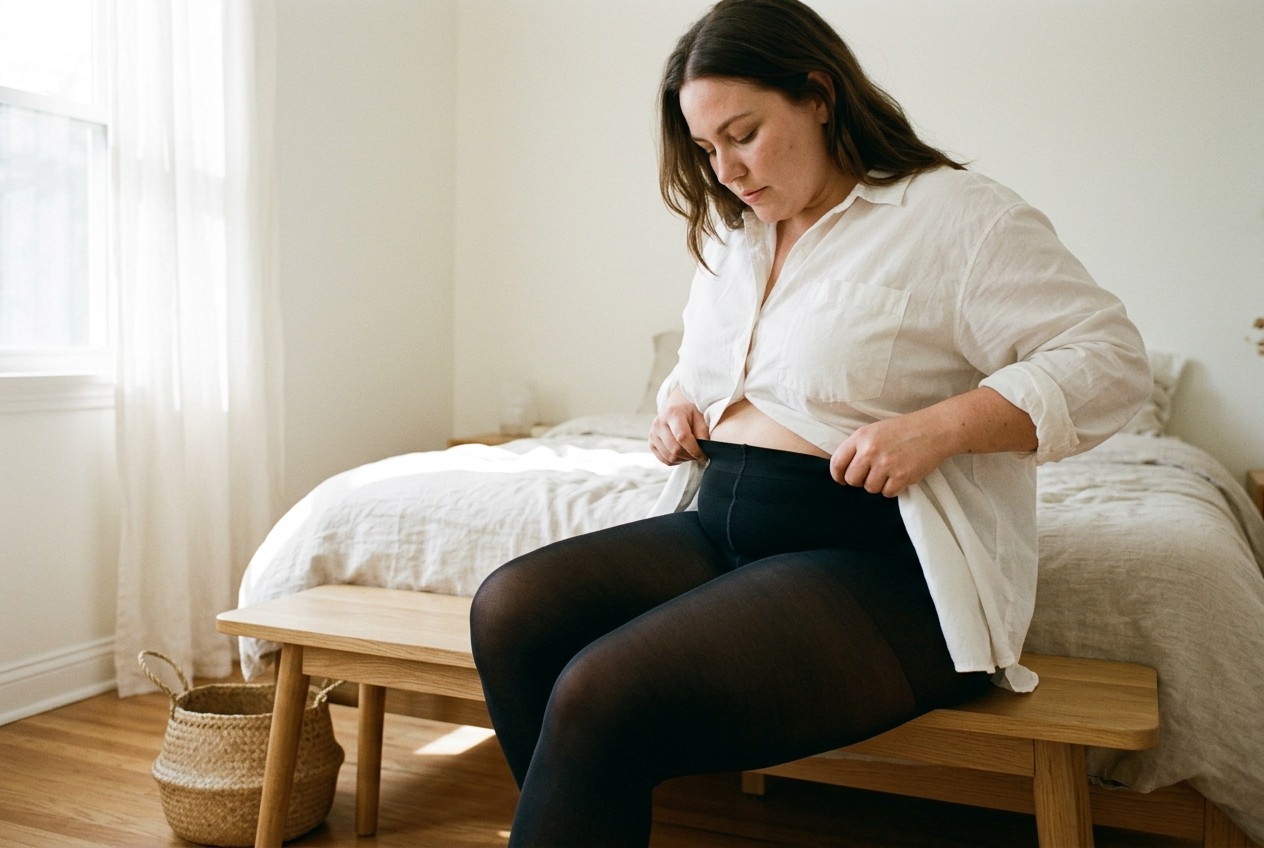
The Complete Plus Size Tights Guide: Sizes, Styles & Fit
Buying plus size tights should be a ten-minute decision, yet most shoppers spend longer than that just decoding the label. One brand's "one size" promises to fit everyone and fits no one well; another grades S through 4XL but gives no clue which row applies to you. The confusion is real, but the solution is simple: plus size tights stop being a gamble the moment you treat them as a system. You measure two numbers, match a style to the season and occasion, and let the fit itself tell you when you got it right. This guide walks through that system step by step — sizing, styles, and the warning signs that mean you should swap sizes — and closes with a three-pair capsule that covers a full year of outfits for curvy women.
Step One: Measure for Plus Size Tights the Way the Chart Expects
Size charts are only as useful as the numbers you feed them. Two measurements do most of the work for plus size tights sizes: your hip at its widest point, taken over bare skin or a thin layer, and your height. Waist and inseam matter for some styles, but hip plus height is what the vast majority of charts — including inclusive S–4XL ranges — actually grade on.
Measure the hip while standing with feet together, keeping the tape level and snug but not compressing the skin. For height, stand against a wall and mark the top of your head. Write both numbers down before you open the chart, then find the row where your hip fits first. Height is the adjustment column: if you are tall for your hip band, look for extra-length options rather than jumping a size, because a longer rise and leg matter more than a bigger circumference you do not need. When your numbers fall between rows, size to the hip — the thigh and hip panels stretch less than the waistband, so the hip is the number that cannot be fudged.
Step Two: Match Plus Size Tights Styles to Season and Occasion
Denier is the number that tells you how much leg will show, and it is the fastest way to sort styles once your size is settled. Sheer tights around 8–20 denier give a light tint with visible skin — think warm evenings and dressy daytime looks. Semi-opaque styles from 20–50 denier are the workhorse of the category: enough coverage for most offices and a matte finish that reads polished rather than bare. Opaque tights from 50–80 denier and up deliver true no-see-through coverage for cooler weather, formal events, and any day you want an unbroken dark column from hem to shoe. Above that, fleece-lined and heavyweight options trade some sleekness for serious warmth.
Match the style to your calendar, not just the thermometer. A 15-denier pair under a midi dress works for an indoor event even in winter; a 70-denier opaque pair is the right call for a long outdoor day in autumn. If you mostly wear dresses and skirts to work, a semi-opaque matte pair in the 40-denier range will earn its place faster than any other single purchase — for more detail on matching weight to climate, see our plus size tights denier guide https://www.ladyfantights.com/blogs/news/plus-size-tights-denier-guide.
Step Three: Read the Warning Signs — What Fit Problems Tell You
Your body will tell you when the size is wrong, and each symptom points to a different fix. Tight horizontal lines across the thigh say the hip band is too small — go up a size, because no amount of stretching will fix a circumference mismatch. Sagging at the crotch by midday says the opposite: the pair is too big or the rise is too short for your torso, so fabric pools where it should sit close. A waistband that rolls into a cord says the band is sitting on the hip crease rather than above it, which is a rise problem, not a width problem. And opacity that fades at the knees over a single wear usually points to elastic fatigue in an old pair rather than a sizing error.
Treat every symptom as data. Tights for curvy women fit correctly when they feel like a second skin: present enough to stay put, gentle enough to forget. If you are constantly adjusting any single spot, change the size or the rise before you blame the style.
Build a Three-Pair Plus Size Tights Capsule
You do not need ten pairs to be dressed for every occasion — you need three that cover distinct jobs. Pair one: opaque black around 60–70 denier, the anchor for work, evenings, and cold days. Pair two: a sheer or semi-opaque neutral (black or a deep nude) at 15–20 denier for dressy events and warmer months. Pair three: a winter-weight style — matte opaque at 80 denier or a fleece-lined pair — for the weeks when warmth is the whole assignment. With those three, any skirt, dress, or tunic in your closet has a leg layer that fits the forecast and the dress code.
Why We Recommend LADYFAN Tights
Every step in this system assumes a brand that grades sizes honestly, and that is the point of the LADYFAN range. Tights run from S to 4XL with hip-graded sizing instead of one-size stretch, so the thigh panel matches your measurement instead of fighting it. Opaque styles knit at high denier hold their black when you bend and sit, the wide flat waistband stays above the hip crease without rolling, and anti-snag knitting protects the seams that fail first. Build your capsule here: https://www.ladyfantights.com/products/2-pairs-women-s-plus-size-pantyhose-control-top-sheer-tights-with-reinforced-toes For cold-weather picks, our winter guide https://www.ladyfantights.com/blogs/news/plus-size-tights-for-winter rounds out the set.
Frequently Asked Questions
Q: Do I need different plus size tights sizes for different brands? A: Yes, and that is normal. Charts are not standardized, so your size in one brand can differ by a full letter in another. Always measure your hip and height fresh, then compare against each brand's own chart. If you buy the same size by habit, you are gambling on two brands grading identically — which they rarely do.
Q: Why do my plus size tights sag at the crotch by midday? A: Sagging usually means the pair is too big for your hip or the rise is too short for your torso, so fabric that should sit close instead pools lower as you move. Try the same style one size down, or a style with a deeper rise, before you give up on the fabric.
Q: Should I choose my plus size tights by hip or by waist measurement? A: Choose by hip. Waistbands are engineered to stretch much further than the thigh and hip panels, so fitting the widest point is what prevents both digging at the waist and tight lines on the thigh. Use height only to adjust for leg length and rise.
Q: Which denier of plus size tights lasts the longest? A: In general, the denser the knit, the more durable the pair: a 60–70 denier opaque style will outlast a 15 denier sheer under the same wear and care. But finish matters too — matte knits hide small snags better than shiny ones, and cold-water hand washing extends any denier.
Conclusion
The complete plus size tights system fits in one paragraph: measure your hip and height, choose by the hip, match denier to the season and occasion, and let sagging, rolling, or tight lines tell you when to change size. Three well-chosen pairs then cover a year of outfits, from sheer summer evenings to heavy winter layers. Start with the measurement, not the color: https://www.ladyfantights.com/products/2-pairs-women-s-plus-size-pantyhose-control-top-sheer-tights-with-reinforced-toes